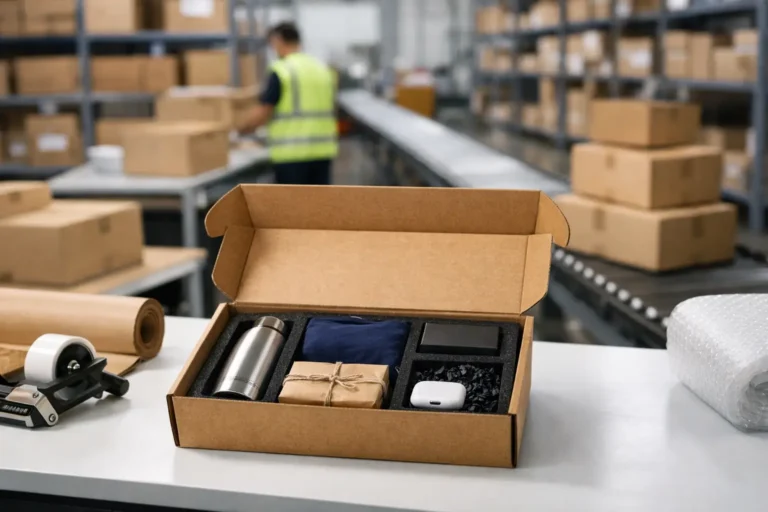
When a program launch is waiting on cards, printed inserts, welcome materials, compliance documents, and outbound shipping, delays rarely come from one big failure. They come from handoffs. Custom fulfillment kits reduce those handoffs by bringing multiple components into one coordinated workflow, so organizations can move faster without losing control over accuracy, branding, or compliance.
For operations teams, marketing leaders, and procurement managers, that matters. A kit is not just a box of assembled items. It is a repeatable fulfillment system built around your program requirements, delivery timelines, inventory rules, personalization needs, and customer experience standards. Done well, custom fulfillment kits save time and money. Done poorly, they create stock issues, packaging errors, and unnecessary vendor management.
What custom fulfillment kits actually solve
Most organizations do not struggle to produce one item. They struggle to coordinate several items across different timelines, suppliers, and approval paths. A membership package may include a personalized card, printed letter, program guide, carrier, envelope, and optional promotional insert. A healthcare mailing may require regulated documents, benefit materials, ID cards, and version-controlled communications. A dealership support package may combine branded forms, service materials, and time-sensitive customer-facing pieces.
When those components are sourced and fulfilled separately, internal teams spend more time chasing status updates than managing outcomes. Custom fulfillment kits solve that by consolidating assembly, inventory management, print production, packaging, and shipping into one program. That consolidation reduces administrative burden and improves visibility across the entire process.
There is also a quality control advantage. If one partner manages kit logic, component availability, print accuracy, and final pack-out, there are fewer opportunities for mismatch. That is especially important when kits include personalized items, regulated communications, or brand-sensitive materials that must arrive complete and on time.
Where custom fulfillment kits deliver the most value
The strongest use cases are usually the ones with recurring complexity. Welcome kits, membership packages, insurance and healthcare communications, promotional program bundles, dealer support materials, onboarding packets, and multi-piece direct mail programs all benefit from a structured kitting model.
In healthcare and insurance, the value often comes from precision and data compliance. Kits may involve personalized cards, plan documents, variable inserts, and strict version control. In financial services, consistency and secure handling tend to be the priority. In promotional marketing, speed to market and brand presentation usually lead the conversation. The core need changes by industry, but the operational requirement stays the same – assemble the right components accurately and deliver them on schedule.
This is where a single-source partner makes a practical difference. If print, personalization, kitting, mailing, and digital workflows are connected, businesses can reduce delays between stages and avoid the friction of managing separate vendors for each part of the job.
How a strong kitting program is built
Effective custom fulfillment kits start with structure, not packaging. Before anything is packed, the program needs clear rules around kit contents, item substitutions, inventory thresholds, personalization fields, approval workflows, and shipping methods. Without that foundation, even a simple kit becomes harder to scale.
The next step is component control. Every item in the kit should be specified against the correct version, quantity, and use case. This sounds basic, but it is where many fulfillment programs lose efficiency. If inserts change frequently, if card files arrive late, or if inventory is tracked manually across locations, the risk of delays increases quickly.
Packaging also deserves more attention than it usually gets. The right package protects materials, supports postal requirements, manages dimensional weight, and presents the brand properly. A premium kit may justify a more polished presentation. A high-volume transactional kit may need a more cost-efficient format. There is no single right answer. It depends on the purpose of the program, the shipping profile, and what the recipient needs to do when the package arrives.
Finally, reporting matters. Businesses need to know what was assembled, when it shipped, what inventory remains, and where exceptions occurred. A kitting program without visibility creates operational risk. A kitting program with reliable reporting helps teams forecast, adjust, and control costs.
Custom fulfillment kits and vendor consolidation
Many organizations first look at kitting as a packaging decision. In practice, it is often a vendor strategy decision. If your print provider does not manage fulfillment, your fulfillment provider does not handle data-driven personalization, and your mail partner is separate again, your team becomes the integration layer.
That arrangement can work for small volumes or simple campaigns. It becomes expensive when programs grow, deadlines tighten, or compliance requirements increase. Vendor consolidation helps reduce communication gaps, duplicate handling, and inconsistent accountability.
A partner that can produce printed materials, personalize cards and documents, assemble kits, manage inventory, process mail, and support digital fulfillment creates a much more stable operating model. Instead of coordinating three or four production streams, your team manages one relationship with clearer service levels and faster issue resolution.
That does not mean every program should be fully consolidated. Some businesses have internal systems, legacy supplier contracts, or specialized packaging requirements that make a mixed model more practical. But when the goal is to streamline operations, custom fulfillment kits are usually strongest when they sit inside an integrated production and delivery environment.
The trade-offs businesses should think about
Customization adds value, but it also adds variables. The more kit versions you create, the more inventory planning, QA oversight, and forecasting discipline you need. A highly customized program may improve customer experience while making replenishment and version control more complex.
Speed has trade-offs too. If your organization needs rapid turnaround, you may need to standardize certain kit components or hold more inventory in advance. If cost control is the top priority, you may choose simpler packaging or fewer personalized inserts. If compliance is non-negotiable, approvals may take longer by design.
This is why the best custom fulfillment kits are not built around a generic idea of flexibility. They are built around the actual priorities of the program. Some businesses need faster deployment. Others need tighter controls, lower shipping spend, or better brand consistency across regions. The right setup depends on what failure would cost you most.
What to look for in a fulfillment partner
A capable fulfillment partner should do more than assemble pieces. They should be able to map the process, identify risk points, manage data carefully, and support volume without losing accuracy. That includes inventory controls, version management, personalized production, postal knowledge, shipping coordination, and clear reporting.
For regulated or customer-sensitive programs, data compliance should be part of the operating model, not a side note in the sales conversation. The same is true for business continuity and quality assurance. If kits contain plan information, financial communications, or member materials, execution standards matter at every step.
It also helps to choose a partner with experience across both print and fulfillment. That combination reduces delays between production and pack-out, especially when kits include cards, variable documents, direct mail elements, and branded collateral. MixtoMart supports this model by combining custom print, personalization, fulfillment, mailing, and digital distribution under one operational structure, which helps organizations reduce complexity without sacrificing control.
Why custom fulfillment kits support better business outcomes
At a practical level, custom fulfillment kits help businesses control the details that customers actually experience. The package arrives complete. The materials match the program. The branding is consistent. The timing works. Internal teams spend less time coordinating vendors and more time managing the program itself.
There is also a cost argument, although it should be viewed realistically. Kitting does not automatically lower spend in every case. If a program is over-engineered, carries too many SKUs, or changes too often, costs can rise. But when kits are designed around operational efficiency, they can reduce rework, compress timelines, lower administrative effort, and improve inventory discipline. Over time, those gains are meaningful.
For growing organizations, that scalability is often the deciding factor. What works for 500 kits may fail at 50,000 if the process depends on manual coordination. A structured kitting program gives businesses a better path to growth because the workflow is designed to repeat accurately.
Custom fulfillment kits work best when they are treated as part of a larger operational strategy, not a packaging afterthought. If your business is managing complex communications, branded materials, recurring program shipments, or personalized customer packages, the question is not whether you need assembly support. It is whether your current process is built to keep up without adding cost, risk, and internal friction. That is usually where the strongest improvement starts.