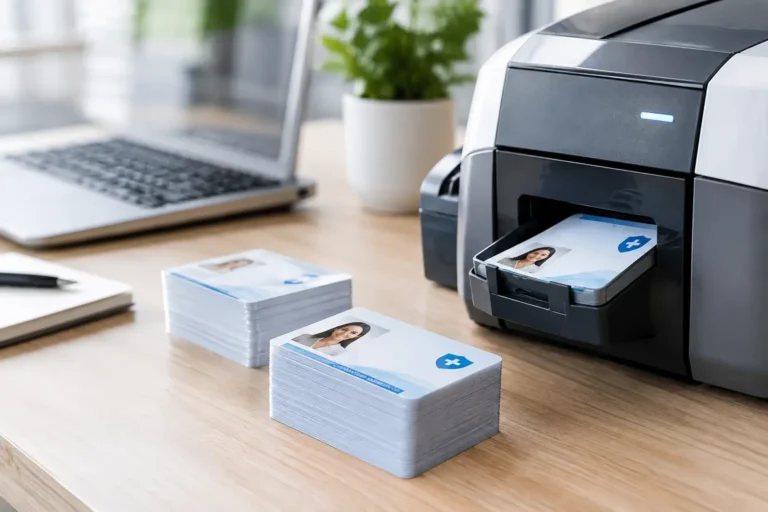
An insurance card may be small, but it carries a large operational burden. It must display accurate member information, withstand daily handling, support quick verification at the point of service, and arrive on time without exposing sensitive personal data. For insurers, benefit administrators, and program operators, learning how to print secure insurance cards means designing a controlled production process, not simply ordering cards from a printer.
The right program brings data handling, card production, quality control, mailing, and digital access into one accountable workflow. That approach reduces rework, limits vendor handoffs, and gives members a more dependable experience from enrollment through renewal.
Start with the card’s operational purpose
A secure insurance card should be designed around how the member, provider, claims team, or service representative will use it. A health benefits card, for example, may need a member ID, group number, plan details, payer contact information, pharmacy details, and a scannable barcode. A roadside assistance or travel insurance card may prioritize a 24-hour support number and coverage instructions.
Before production begins, define the required fields, the source of each field, and who approves the final card layout. This prevents a common and costly issue: cards going into production before the variable data rules are fully documented. A missing prefix, outdated phone number, or improperly formatted identifier can trigger avoidable reprints and member calls.
The card format also depends on its intended life span. Paper cards can be appropriate for temporary coverage, welcome packages, or rapid issue needs. Plastic cards typically make more sense for ongoing membership or benefits programs because they are durable, easy to carry, and better suited to repeated use. The right choice depends on the program, expected volume, budget, and whether the card is likely to be presented frequently.
Build security into the data workflow first
The greatest security risk in insurance card production is often not the physical card. It is the movement of variable member data between systems, people, and suppliers. Secure card printing begins with a documented data workflow that controls how files are received, validated, processed, stored, and destroyed or retained.
Use encrypted file transfer methods and restrict access according to job responsibilities. Teams should work from approved data files rather than manually edited copies passed through email. Maintain clear version control for card artwork and data specifications so that the approved format is always identifiable.
Data validation should happen before personalization begins. That includes checking for required fields, duplicate records, invalid postal codes, formatting issues, and exceptions such as records that require suppression or alternate delivery. For recurring programs, establish a repeatable intake process rather than rebuilding the workflow with every monthly or enrollment-period file.
Organizations serving Canadian members should account for applicable privacy obligations, including PIPEDA where relevant, as well as provincial requirements and contractual commitments. Programs that include U.S. members may also require controls aligned with healthcare, insurance, or state-level privacy obligations. Compliance requirements vary by organization and jurisdiction, so legal and privacy teams should define the standard before files are released for production.
Select practical card security features
Security features should support the actual risk profile of the program. More features are not always better if they create production delays, reduce readability, or add cost without solving a meaningful problem. The goal is to make the card reliable for legitimate users and more difficult to alter, duplicate, or misuse.
For many insurance programs, a combination of durable stock, high-quality colour printing, controlled personalization, and a unique member identifier provides an effective baseline. Variable barcodes or QR codes can support faster verification when they connect to a controlled system, but the data encoded should be carefully considered. Avoid placing more personal information in a scannable code than the use case requires.
Depending on the program, additional options may include:
- Tamper-evident design elements that make alterations more visible
- Serialized numbering or controlled member ID logic
- Microtext, fine-line patterns, or other difficult-to-reproduce design details
- UV-reactive or specialty inks for higher-risk programs
- Signature panels or writable areas where operationally required
A security feature only adds value when staff and service providers know how to recognize or use it. Keep instructions clear and avoid overcrowding the card. In most cases, legibility, accurate data, and dependable verification matter more than decorative complexity.
Design for clarity, durability, and brand consistency
Insurance cards are functional documents first. Members should be able to find the information they need in seconds, particularly when they are standing at a pharmacy counter, clinic reception desk, repair facility, or roadside location. Use a clear hierarchy that gives priority to the member name, plan or group details, member ID, and contact information.
Typography must remain readable after personalization and under normal wear. Small type may save space, but it can create frustration for members and providers. Contrast matters as well. Light text on a busy branded background may look polished in a proof but perform poorly in real-world use.
Durability should match the card material and distribution plan. Plastic cards can be produced with protective finishes that help preserve printed data. Paper cards can be supplied as inserts within welcome letters or kits, which protects them during mailing and creates an opportunity to explain benefits, digital access, or next steps.
Brand consistency is equally important. A card is often one of the first physical items a member receives from an insurer or benefit program. Consistent colours, terminology, contact details, and logos reinforce trust while reducing confusion for support teams.
Control personalization and quality at every stage
Personalized card production requires more than a visual proof. Static artwork approval confirms the design, but variable-data proofing confirms that the fields populate correctly across real records. Test records should cover common and unusual scenarios, including long names, multiple plan variations, bilingual requirements where applicable, missing optional fields, and different address formats.
Once production begins, quality control should verify both print quality and data accuracy. That can include barcode validation, image inspection, record-level reconciliation, and matching cards to accompanying letters or kits. The level of inspection depends on volume and risk, but there should always be a documented process for identifying exceptions before mail induction.
Reconciliation is particularly valuable for insurance and benefits programs. The number of accepted records, cards produced, pieces inserted, and mail pieces released should align. If a record is held because of a data exception or address issue, it should be visible in reporting rather than disappearing into a manual queue.
Treat mailing and fulfillment as part of card security
A correctly printed card can still create a poor member experience if it is mailed to the wrong address, separated from its explanation letter, or delayed by a fragmented fulfillment process. Insurance card production should connect directly to address hygiene, document insertion, kitting, and postal preparation.
For example, a new-member package may include a personalized card, benefit overview, digital portal instructions, and a targeted insert based on plan type. Producing and assembling these components through separate vendors increases the chance of mismatches and delays. A consolidated workflow keeps the card and its related communications connected from data intake through final delivery.
Return mail processing also deserves attention. Undeliverable cards can signal an outdated address, a terminated membership, or a member who needs another communication channel. A defined return-mail process helps organizations update records and reduce repeat postage costs while protecting sensitive materials from unnecessary circulation.
Digital delivery can complement physical cards, especially when members need coverage information quickly. However, a digital card should not be treated as an afterthought. It needs the same disciplined data controls, approval process, and brand consistency as the printed version. Some programs benefit from offering both: immediate digital access followed by a durable physical card.
Choose a production partner that reduces handoffs
The most efficient insurance card programs bring production, personalization, fulfillment, and distribution under coordinated management. When separate vendors own the print, mail, data, and digital portions of the program, internal teams often become the project managers for every exception. That creates administrative strain and makes it harder to trace responsibility when timing or data issues arise.
A single-source partner can streamline approvals, standardize recurring production, provide reporting, and scale during open enrollment, acquisitions, renewals, or high-volume program launches. MixtoMart supports this type of end-to-end execution by combining secure data processing, customized card production, fulfillment, direct mail, and digital distribution within a coordinated workflow.
The right process for printing secure insurance cards is one that protects member data without slowing the program down. Build the workflow around controlled data, usable card design, verified personalization, and accountable delivery, and each card becomes a dependable service tool rather than another operational exception.