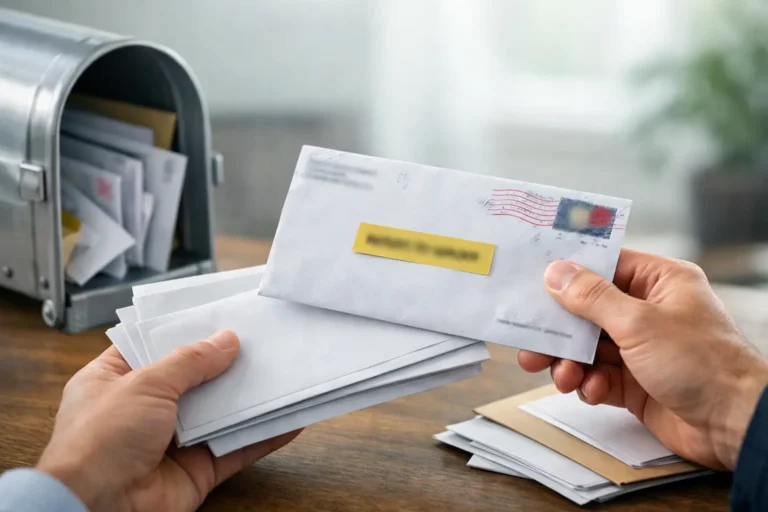
A returned statement is more than an undelivered envelope. For organizations sending invoices, benefit explanations, account notices, policy documents, or customer correspondence, it can signal a data-quality issue, a compliance concern, and an avoidable operating cost. Why do mailed statements get returned? The answer is rarely limited to one bad address. Return mail usually reflects a breakdown somewhere between customer data, document production, postal preparation, and exception handling.
For high-volume programs, even a modest return rate can create significant rework. The organization may need to review the account, update contact records, resend a time-sensitive document, manage customer service inquiries, and securely process the returned piece. A disciplined return-mail process helps reduce those costs while protecting the accuracy and reliability of customer communications.
Why Do Mailed Statements Get Returned?
The most common reason is that the recipient cannot be located at the address provided. People move, businesses relocate, unit numbers are omitted, and customer records are not always updated when a mailing is produced. Postal operators may return these items with endorsements such as moved, unknown, insufficient address, no such number, or vacant.
However, an address that appears complete can still be undeliverable. A street name may be misspelled, a postal code or ZIP code may not align with the municipality, or an apartment, suite, rural route, or civic number may be missing. In Canada, address formatting and postal code accuracy matter. In the United States, standardized delivery-point information is equally critical. Small data errors can prevent automated sorting or final delivery.
Statements may also be returned because a recipient has refused mail, is deceased, has closed an account, or no longer accepts mail at a commercial location. These are different business situations, and they should not all trigger the same response. Treating every return as a simple address correction can result in repeated mailings to an invalid or inappropriate destination.
Postal handling can contribute as well. A damaged envelope, incomplete return address, unreadable barcode, poor print contrast, enclosure thickness, or an incorrect mailpiece design can interfere with processing. These issues are less common than address problems, but they become more likely when high volumes are produced without consistent quality controls or postal review.
Returned Mail Often Starts With Data Management
The strongest return-mail reduction strategy begins before a statement enters production. Customer addresses should be validated, standardized, and deduplicated as part of the data-processing workflow. This is particularly valuable for recurring statements, where an outdated record can generate the same return every month.
Address hygiene should account for the way your organization collects and maintains data. A customer may enter a mailing address through a web form, provide it verbally to a call centre, submit it through a claims process, or have it loaded from a partner system. Each source introduces different risks. Manual entry may create typos, while batch imports can introduce field-mapping errors, truncated suite information, or formatting inconsistencies.
It also matters when the address was last confirmed. For example, a customer who updated their residence after a statement file was created may still receive mail at the prior location. Depending on your cycle timing, it may be necessary to apply defined cut-off rules, refresh addresses before production, and establish a controlled process for late updates.
For regulated organizations, data management is also a compliance matter. Healthcare providers, insurers, and financial services organizations need to limit unnecessary exposure of personal information. If sensitive statements continue to travel to an old address, the operational issue can quickly become a privacy and reputational concern. Return mail should therefore feed back into customer-record maintenance, not sit as an isolated mailroom task.
Postal Preparation Can Affect Delivery Results
A correctly addressed statement can still face delays or returns if the mailpiece is not prepared for efficient postal processing. Mail automation depends on consistent addressing, clear placement, legible text, appropriate barcode application, and envelope construction that meets applicable postal requirements.
The address block needs sufficient contrast and clear space. Variable data must print cleanly across the full production run, including on envelopes with windows. If a folded statement shifts in the envelope, part of the address may be obscured. If the document layout places variable information too close to the window edge, scanning equipment and postal staff may have difficulty reading the address.
Return addressing also deserves attention. An organization needs a reliable address where undeliverable pieces can be received and processed. When a statement is returned to a location that is not equipped to log, secure, scan, and route it, the value of the returned item is lost. The mail may sit unattended, be handled inconsistently, or never reach the team responsible for correcting the record.
For recurring programs, a postal and lettershop review can identify design or production factors before they affect thousands of pieces. This is especially useful when changing envelope stock, introducing a new statement format, adding inserts, or migrating data from another system.
The Operational Cost Goes Beyond Postage
Return mail creates direct costs through printing, materials, postage, handling, and potential re-mailing. The larger cost is usually hidden in administrative effort. Teams must open and sort returned envelopes, identify the related account, classify the reason for return, update the system of record, and determine the next communication step.
When statements contain payment information, coverage details, or action deadlines, delayed delivery can also affect cash flow and service levels. A customer who does not receive a billing statement may miss a due date. A member who does not receive benefit information may call for support. A policyholder who misses a notice may believe the organization failed to communicate. These outcomes increase service demand and can weaken customer trust.
There is a practical trade-off to manage. It is not always cost-effective to research and resend every returned piece immediately. The right action depends on the statement type, regulatory obligations, account value, delivery deadline, and availability of an alternate communication channel. A past-due financial notice may require rapid follow-up, while a general marketing communication may simply be suppressed from future mailings.
Build a Better Return-Mail Workflow
An effective workflow turns returned statements into usable delivery intelligence. First, returned pieces should be received at a secure, controlled location. They should then be opened and processed according to documented privacy and retention procedures, particularly when statements contain personal or confidential information.
The return reason should be captured consistently. Categories such as moved, insufficient address, unknown recipient, refused, vacant, and deceased enable different downstream actions. Without standardized reason codes, organizations cannot distinguish a temporary delivery issue from an address that should be removed or escalated.
Next, the account record should be matched accurately and routed to the appropriate system or team. In some cases, this means correcting an obvious unit-number error. In others, it may mean flagging the account for customer outreach, suspending future physical mail, or initiating an approved digital delivery option. The workflow should preserve an audit trail showing what was returned, when it was processed, and what action followed.
For high-volume programs, scanning and data capture can make this process faster and more measurable. Instead of manually tracking stacks of envelopes, teams can create a structured return-mail file that connects exceptions to account records and reporting. This supports trend analysis by geography, product line, source system, customer segment, or campaign.
Reduce Return Rates Before the Next Statement Cycle
The best programs measure return mail as an operational performance indicator, not merely a postal expense. Review return rates by mailing cycle and compare them against changes in data sources, customer onboarding, document design, and delivery channels. A sudden increase may point to a failed import, a system conversion issue, a formatting problem, or a customer population that has recently moved.
Organizations should also give customers practical ways to maintain their contact information. Address updates can be collected through account portals, service calls, renewal processes, claims interactions, and targeted outreach. The more fragmented the customer journey, the more important it is to ensure updates flow to the system used for statement production.
A combined physical and digital distribution strategy can further reduce disruption. Digital delivery is not the right replacement for every statement or every customer, and consent requirements must be managed carefully. But when properly implemented, it gives organizations a dependable fallback for eligible recipients and helps maintain communication continuity when postal delivery fails.
MixtoMart supports organizations that need to coordinate data processing, document production, postal execution, return-mail processing, and digital fulfilment within a controlled operational program. Consolidating these activities can reduce handoffs, improve visibility, and help teams act on returned mail before the next cycle creates the same exception again.
A returned statement should prompt a useful question: what does this item reveal about the customer record and the delivery process? When that question leads to a clear, secure, and timely action, return mail becomes an opportunity to improve communication accuracy rather than a recurring source of waste.